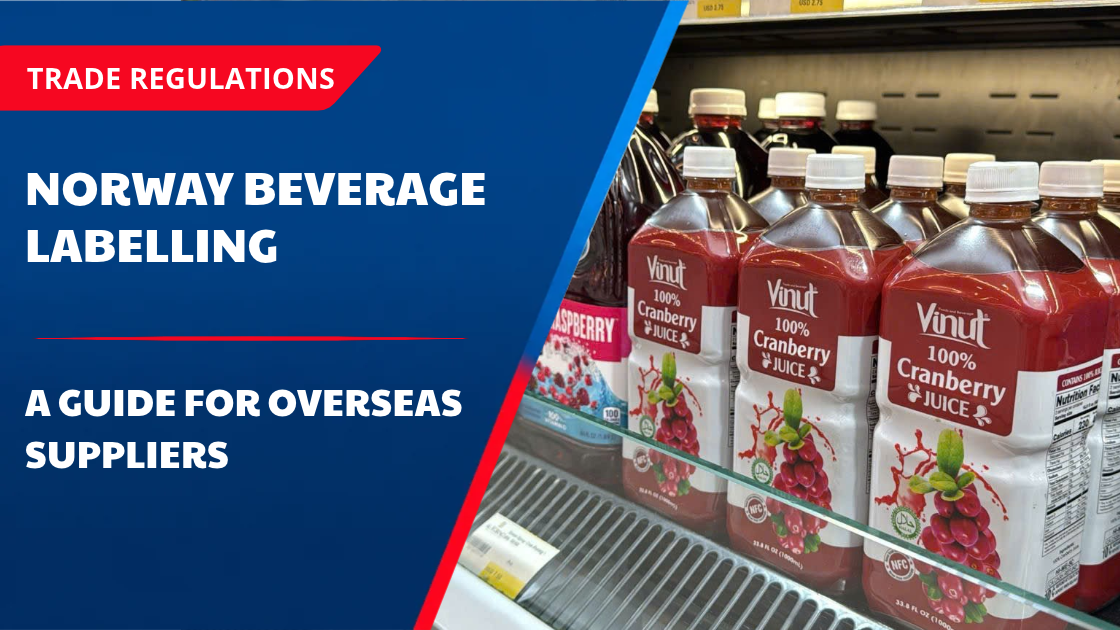
For Vietnamese beverages entering Norway, label approval should happen before the shipment, not after arrival. Mandatory food information generally needs Norwegian wording or a language sufficiently similar in spelling. Danish and Swedish are not blanket substitutes: differing words may need Norwegian translation. Importers should check the finished recipe, product name, ingredient list, allergens, nutrition and responsible operator against the actual retail artwork. Norwegian Food Safety Authority (Mattilsynet)
Who is responsible for a Norwegian-market beverage label?
Norway is part of the European Economic Area (EEA), not the European Union. Its food-information rules implement relevant EEA legislation through Norwegian law. Mattilsynet's guidance cites Regulation (EU) No 1169/2011 Article 8 and requires food businesses to ensure mandatory information is accurate. When food is marketed under an operator established outside the EEA, the importing operator has defined food-information responsibilities. Suppliers still need to provide reliable product data. Mattilsynet: responsibility and language
For a Vietnamese beverage producer, the practical first step is to send the Norwegian buyer a complete ingredient specification and current packaging files. The buyer should identify the responsible Norwegian/EEA food business operator, decide who approves translations and sign off on retail artwork. Commercial agreements may allocate preparation tasks but cannot replace legal responsibilities.
Norwegian, Swedish or Danish: which language is acceptable?
Mattilsynet states that compulsory food information must be in Norwegian or a language sufficiently similar to Norwegian in spelling. Mattilsynet accepts Swedish or Danish when the corresponding words match Norwegian, even if spelling differs. Words that differ from Norwegian must be translated. Additional languages can appear on the pack, provided the information stays consistent. English-only artwork should not be treated as compliant without a specific legal basis. Mattilsynet: language requirement
This is a word-by-word test, not a blanket Scandinavian-language exemption. A Swedish product name may be understandable while a storage instruction or allergen statement is not. Ask a Norwegian-market reviewer to verify the final printed wording, rather than approving a general translation spreadsheet alone.
What information needs checking on a beverage pack?
Norway's prepacked-food guidance addresses the food name, ingredients, additives, highlighted ingredients, allergens, net quantity, durability date, necessary storage instructions, responsible operator details and nutrition information. Country of origin is required in specified circumstances, not automatically on every drink. Product-specific conditions and exemptions must be checked. Mattilsynet: prepacked food labels
For juice, coconut drinks, tea and ready-to-drink coffee, start with the actual formulation. The label's legal food name must match the category and ingredient composition. Ingredients are generally listed in descending order by weight, and a highlighted ingredient may trigger a quantity declaration. Where an allergen subject to mandatory declaration is present, it needs the prescribed emphasis. Mattilsynet: ingredients and quantitative declarations
The named responsible food business operator and address need particular attention. Mattilsynet says a postal address is the general rule, with limited conditions for alternative contact details. A brand logo or website alone should not be presumed sufficient. Mattilsynet: operator address
Claims, nutrition and product-category exceptions
Use the approved finished-product data to prepare the nutrition declaration, rather than copying values from a similar flavour or package size. Check whether an applicable exemption exists before omitting an otherwise mandatory field. Nutrition and health claims used on the package or in marketing must comply with their own conditions. Words such as “no added sugar”, “source of vitamins” or health-benefit statements require product-specific substantiation, not just marketing preference. Mattilsynet: health-claims guidance
A ready-to-drink coffee may require a different ingredient and allergen review from fruit juice. Sweeteners, caffeine, additives and product-specific naming rules deserve an additional check when relevant. Do not assume that the same Norwegian label can be reused across formulas, even within the same brand.
Buyer artwork handoff before placing an order
Buyer approval step | Evidence to request from the supplier |
|---|---|
Product identity | Finished recipe, proposed legal name, pack size |
Ingredients and allergens | Full ingredient and additive breakdown, allergen statement |
Nutrition and claims | Finished-product nutrition data, support for each claim |
Operator and consumer information | Responsible EEA operator details, durability and storage wording |
Final artwork | Norwegian-language proof checked against the approved specification |
Assign one person on the importer side to reconcile the printed artwork with technical documents. Review legibility and placement at actual package size. Retain the approved version and a change-control process for subsequent flavours or recipe adjustments. Mattilsynet: imported-food labelling
The Vietnam–EFTA Free Trade Agreement was signed on 18 October 2026, but EFTA still listed its entry into force as pending on 12 November 2026. Its signature does not waive Norway's labelling rules or establish an already-available tariff preference. EFTA treaty status
For beverage sourcing or a Norwegian-market packaging brief, contact Nam Viet Group with the intended product category, target channel, formulation and packaging format. Nam Viet Foods & Beverage JSC can discuss manufacturing and product information for buyer review. Final Norwegian label approval remains the responsibility of the relevant food business operators.
Frequently asked questions
Is English-only labelling sufficient for retail beverages in Norway?
Generally no. Mattilsynet requires mandatory food information in Norwegian or an adequately similar language. An importer should not approve English-only artwork without checking the applicable legal requirements.
Are Swedish and Danish labels automatically accepted in Norway?
No. Swedish or Danish wording may be accepted where the corresponding words match Norwegian, despite spelling differences. Different words must be translated into Norwegian, and the importer should review the final label.
Does the signed Vietnam–EFTA FTA change Norwegian beverage labelling?
No. EEA-related Norwegian food-information duties remain separate. As checked on 12 November 2026, EFTA still described the agreement's entry into force as pending.