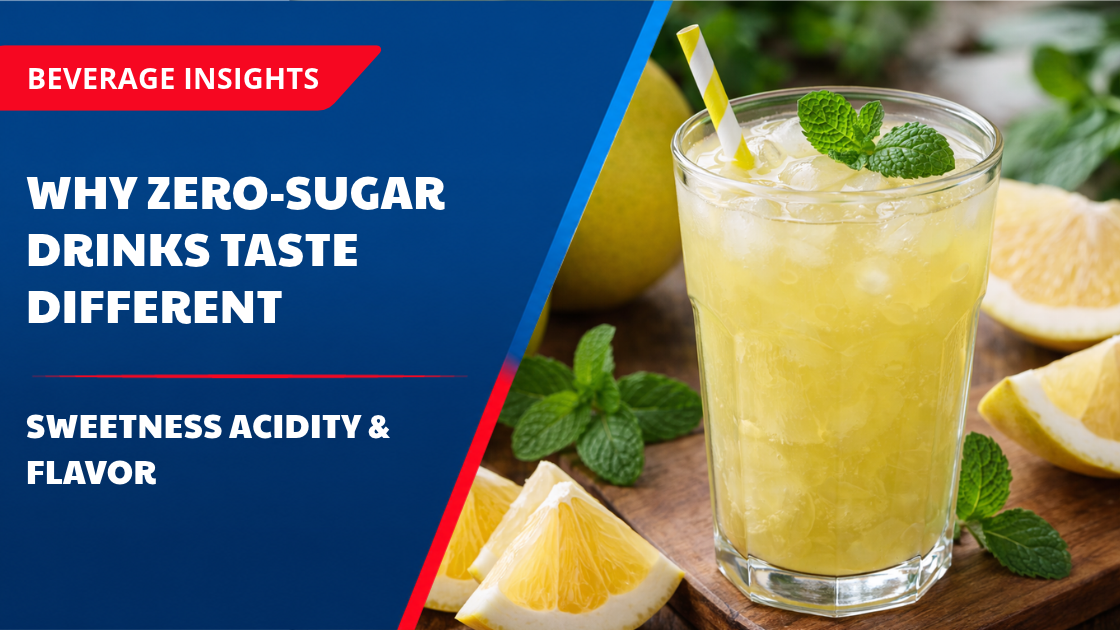
Two drinks can both carry a zero-sugar claim and taste surprisingly different. One may deliver sweetness immediately, another may leave a lingering note, and a third may seem sharper or more aromatic despite having a similar sweetness level. The explanation is not a single “better” sweetener. Sweetener choice, acid balance, flavor, carbonation and the way those elements interact all shape the drinking experience. This guide explains what the evidence can tell us, what remains specific to a finished recipe and how to compare samples without assuming that a zero-sugar label predicts taste.
Zero sugar describes sugar content, not a sweetness recipe
A sugar-content claim does not identify which ingredients create sweetness. In the United States, the FDA defines a “sugar free” claim with conditions that include less than 0.5 gram of sugars per reference amount customarily consumed and per labeled serving. That is a regulatory definition, not a guarantee that every international market uses identical wording or thresholds. The FDA's sugar-free guidance also explains related ingredient and calorie-labeling conditions.
A drink can taste sweet without relying on a conventional sugar ingredient. The FDA lists several high-intensity sweeteners used in foods, including aspartame, sucralose and acesulfame potassium, alongside certain high-purity steviol glycosides and monk-fruit extracts addressed through GRAS notices. These ingredients differ in sweetness intensity and how they are used. Do not infer that a product contains a particular sweetener merely because it tastes sweet.
“No added sugar” is a different question. A beverage may contain naturally occurring sugars even when none has been added. The FDA distinguishes Total Sugars from Added Sugars on U.S. Nutrition Facts labels. Read the complete declaration and ingredient list rather than treating front-of-pack wording as a flavor specification.
Sweetness is a sensation that changes over time
Sweetness is not simply a number on a label. It has an onset, a peak and a finish. Some sweeteners can create a fast impression that fades quickly. Others may build or linger. The side sensations a person notices, such as bitterness or a metallic note, can also affect how balanced a drink seems.
In a 2019 sensory study, 20 participants evaluated sweetener solutions over time, with researchers recording sweetness and several side-taste descriptors. The samples differed in onset, lingering sweetness and side tastes. This was a controlled comparison of solutions, not a ranking of commercial zero-sugar beverages. It nevertheless shows why matching an approximate sweetness intensity does not guarantee matching the complete taste experience.
A 2024 pharmacological analysis discusses possible explanations for delayed or lingering sweetness in certain noncaloric sweeteners, including receptor-binding behavior. That mechanistic discussion should not be turned into a claim about the exact duration of sweetness in an untested finished drink. The useful question for a tasting panel is straightforward: what is noticed first, what remains after swallowing, and does the finish fit the intended flavor?
Acidity changes the balance, even when sugar is absent
Acid contributes much more than a “sour” label. In a citrus-style drink, acidity can help establish a crisp profile, but it can also make sweetness seem less prominent if the formula is not balanced. The relevant variables include which acid is used, its concentration, the sweetener system and the flavor base. A single pH reading does not fully describe how sour a beverage tastes.
The sensory literature illustrates why the complete matrix matters. In an experimental study of carbonated model solutions, carbonation enhanced sourness ratings under some lower-acid conditions but not at higher acid levels tested. The effect was conditional, rather than a universal statement that more bubbles always create more sourness. For a new zero-sugar lemon, berry or tropical concept, acid adjustment is therefore a hypothesis to test, not a shortcut to a proven consumer preference.
When comparing prototypes, record perceived sourness separately from overall liking. A panel may agree that one sample is sharper while disagreeing about which is more enjoyable. Both observations are valuable, but they answer different questions.
Flavor and aroma can make two sweet drinks feel unlike one another
“Flavor” includes more than basic taste. Aroma, recognizable fruit notes and the way sweetness supports or clashes with those notes influence the overall impression. A peach-style drink and a citrus-style drink need not taste equally sweet at the same nominal sweetener concentration. Different ingredients, acids and aroma systems can change the result. This is a formulation consideration, not a claim that every consumer in a market prefers a particular flavor.
Sweetener behavior has been studied in finished beverage matrices as well as simple solutions. In a 2020 study using a tamarind beverage, researchers compared sucrose replacement options using acceptance and time-intensity tests. The stevia-sweetened sample showed a longer sweet sensation and more bitterness under those tested conditions, while some other samples performed differently. Those findings belong to that tamarind recipe and study design. They do not establish how all stevia-based or all tropical zero-sugar drinks will taste.
Flavor cues can also shape what tasters expect before the first sip. That expectation should be treated as a potential testing variable, not a measured effect in a product that has never been evaluated.
Carbonation and mouthfeel are separate parts of the experience
Fizz provides a physical sensation alongside taste and aroma. Two zero-sugar samples may share a similar sweetness level but differ in carbonation, perceived sharpness and overall finish. However, carbonation does not always have the same effect across formulations. The model-solution results described above are a reason to measure and control carbonation during a test rather than assume a fixed sensory outcome.
Sugar can also contribute properties beyond sweetness. A 2007 study of commercial carbonated beverages examined relationships among measurements such as viscosity, soluble solids, acidity and descriptive sensory attributes. It identified physical-property differences relevant to how regular and diet drinks feel. This does not mean every zero-sugar drink is thin or that one ingredient always solves mouthfeel. It means a sweetener substitution may leave additional formulation questions, particularly for body and finish.
How to compare zero-sugar drinks without guessing
Start with labels when comparing products on a shelf. Then use a controlled tasting process if the goal is product development or supplier evaluation. The two methods answer different questions: the label describes declared ingredients and nutrients, while tasting captures perception under the conditions actually tested.
- Check the claim and nutrition panel. Verify the sugar declaration, serving basis and total carbohydrate information for the intended market. Do not equate zero sugar with zero calories or with the absence of sweeteners.
- Read the ingredient list. Look for declared sweeteners, acidulants and flavor terms. The FDA explains that ingredients are generally listed by weight predominance, with specific labeling exceptions.
- Compare like with like. Chill samples to the same temperature, use the same serving volume and similar cups, and keep carbonation loss to a minimum. Otherwise a serving condition may be mistaken for a formulation difference.
- Use blind-coded samples. Ask tasters to rate first sweetness, lingering sweetness, sourness, off-notes, aroma and overall liking separately. A blinded, randomized comparison is a proposed practical framework here, not a test already performed by Nam Viet.
- Repeat before deciding. Differences in panel size, consumer group, package age and storage conditions can matter. A few informal tastings cannot establish purchase preference or market demand.
For buyers, ask the producer for the current finished-product specification and market-specific label artwork. For product teams, document what changed between prototypes and distinguish trained descriptive feedback from consumer acceptance. Neither ingredient lists nor a small tasting alone can prove a recipe will perform commercially.
What the taste difference does, and does not, mean
A zero-sugar drink that tastes more bitter is not automatically unsafe, just as a smoother finish does not establish a health benefit. Sensory performance, nutritional information and ingredient authorization are separate topics. Sweetener permissions and claim rules must be checked for the destination country and actual formula. Taste studies should not be used as clinical evidence.
The bottom line is simple: two zero-sugar beverages can differ because their sweeteners, acids, flavors, carbonation and physical properties differ. First identify what the label confirms. Then test the finished product under comparable conditions. The most useful outcome is not a universal “best-tasting” formula but a clear account of what people perceived, who participated and what still needs verification.
Frequently asked questions
Why can two zero-sugar drinks taste different if both contain no sugar?
Their sweetener systems, acids, flavors, carbonation and other ingredients may differ. The zero-sugar claim does not describe sweetness timing, aroma or mouthfeel.
Does zero sugar mean a drink contains no sweetener?
No. Some zero-sugar drinks use high-intensity sweeteners, while others may have no sweetener at all. Check the ingredient list and the product's destination-market label.
Why does a zero-sugar drink sometimes leave a lingering sweet taste?
Controlled sensory studies have reported different sweetness-duration profiles among sweeteners. The effect in any finished beverage depends on its formula and must be tested rather than assumed.
How should a beverage buyer compare the taste of two zero-sugar samples?
Verify equivalent serving conditions and sample age, use blind-coded tasting, record sweetness onset and finish as well as acidity, aroma and overall liking, and request finished-product specifications.