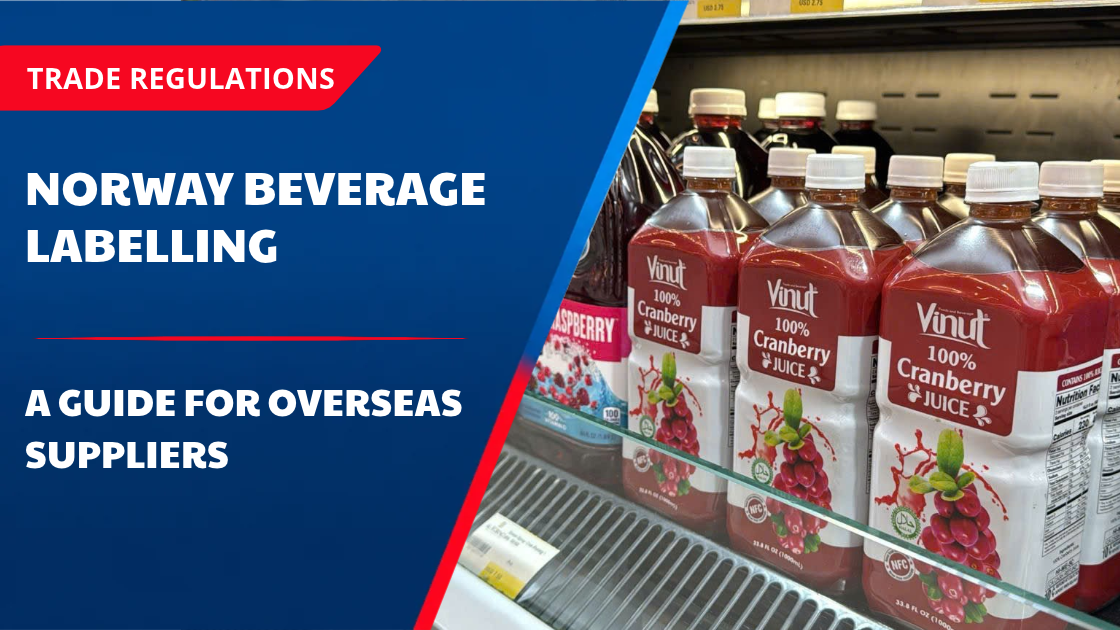
For Vietnamese juice and coconut water sold in Switzerland, importers should approve the Swiss-market label against the finished recipe rather than reuse EU or English export artwork automatically. Verify the food name, ingredients, allergens, nutrition, production country, responsible business and language. The Swiss Federal Food Safety and Veterinary Office (FSVO) outlines these requirements. Beverage-specific rules still need a product-by-product check. FSVO — food labelling.
1. Name the beverage from its actual formulation
A brand name does not replace the legally appropriate food name. Swiss guidance distinguishes prescribed, customary and descriptive names. Fruit juice, nectar and fruit drink cannot be treated as interchangeable descriptions without checking the Swiss Beverages Ordinance. Coconut water likewise needs a category assessment based on its composition. FSVO — product name and beverage requirements.
Ask the manufacturer for ingredient percentages, process, product designation and intended claims. The Swiss importer should resolve naming questions before artwork approval. Neither a tropical fruit image nor a PET bottle determines the legal category.
2. Review ingredients, allergens and fruit imagery
Swiss guidance generally requires prepacked-food ingredients to be listed in descending production-weight order, subject to exceptions. Relevant allergens must be highlighted. Certain ingredients prominently named or pictured may need quantitative declarations. FSVO — ingredient information.
For mixed-fruit juice, reconcile the featured fruits with the formula. For coconut water containing added juice, sugar or flavourings, do not copy a single-ingredient label. Assess allergens using actual ingredients and manufacturing evidence. A coconut image is not evidence of any particular mandatory allergen statement.
Where the formulation or ingredient status is uncertain, obtain a product-specific regulatory assessment before representing the beverage as cleared for import. Switzerland subjects some third-country foods to additional controls, but not every plant beverage has the same border pathway. FSVO — third-country food imports.
3. Verify nutrition, dates and regulated claims
Nutrition declarations are generally required for prepacked foods unless an exception applies. FSVO identifies energy, fat, saturated fat, carbohydrate, sugars, protein and salt among the usual entries. Use finished-product data and verify the applicable presentation. FSVO — nutrition.
Claims such as “sugar free” or “source of fibre” have conditions. Health claims are also regulated. Do not substitute “no added sugar” for “sugar free,” or infer permission for either from a product name. FSVO — nutrition and health claims.
Confirm the appropriate best-before or use-by date and any storage or use directions. Swiss guidance distinguishes quality-related dates from safety-related dates. The right choice depends on the beverage and processing evidence. FSVO — dating and storage.
4. Check Swiss language, origin and business details
Mandatory information generally appears in at least one Swiss official language. Other wording is permitted only in limited circumstances where consumers can clearly understand it. English-only artwork must not be assumed sufficient. Information must be legible and placed on the package or an attached label. FSVO — language and legibility.
Swiss labels generally identify a business involved in manufacture, import, packaging or sale, including its address. This address does not always have to be Swiss. The country of production is normally stated, with exceptions, while ingredient origin may also need disclosure when presentation could mislead. These are different from preferential customs origin. FSVO — address and origin.
EFTA reports that the Viet Nam–EFTA FTA was signed on 18 October 2026 but its entry into force remained pending on 11 November 2026. No current VEFTA tariff preference should be assumed, and the pending treaty does not replace Swiss food-labelling rules. EFTA — Viet Nam agreement.
5. Give the importer a final artwork decision
Review item | Manufacturer supplies | Swiss buyer confirms |
|---|---|---|
Product name | Formula, process, category rationale | Correct Swiss designation |
Ingredients and claims | Full list, allergen facts, claim support | Declarations and permitted wording |
Nutrition and shelf life | Nutrition and stability basis | Values, dates, storage text |
Language and origin | Final artwork, production details | Readable local label and address |
Stop before printing if a category, mandatory declaration or claim remains unresolved. This checklist is an artwork-control tool, not a clearance certificate.
For sourcing discussions, send your Swiss sales channel, beverage specification and draft label requirements to Nam Viet Group using its official contact page. Confirm product dossier needs before finalising the commercial order.
Frequently asked questions
Does a multilingual label automatically comply in Switzerland?
No. The mandatory Swiss information must still be accurate, readable and in an acceptable language. The importer must review the final artwork.
Can coconut water automatically use the legal name fruit juice?
No. Classify the actual finished drink under applicable Swiss beverage rules before choosing its product name.
Does signing VEFTA remove Swiss labelling requirements?
No. Swiss food rules apply independently. EFTA still listed entry into force as pending on 11 November 2026.