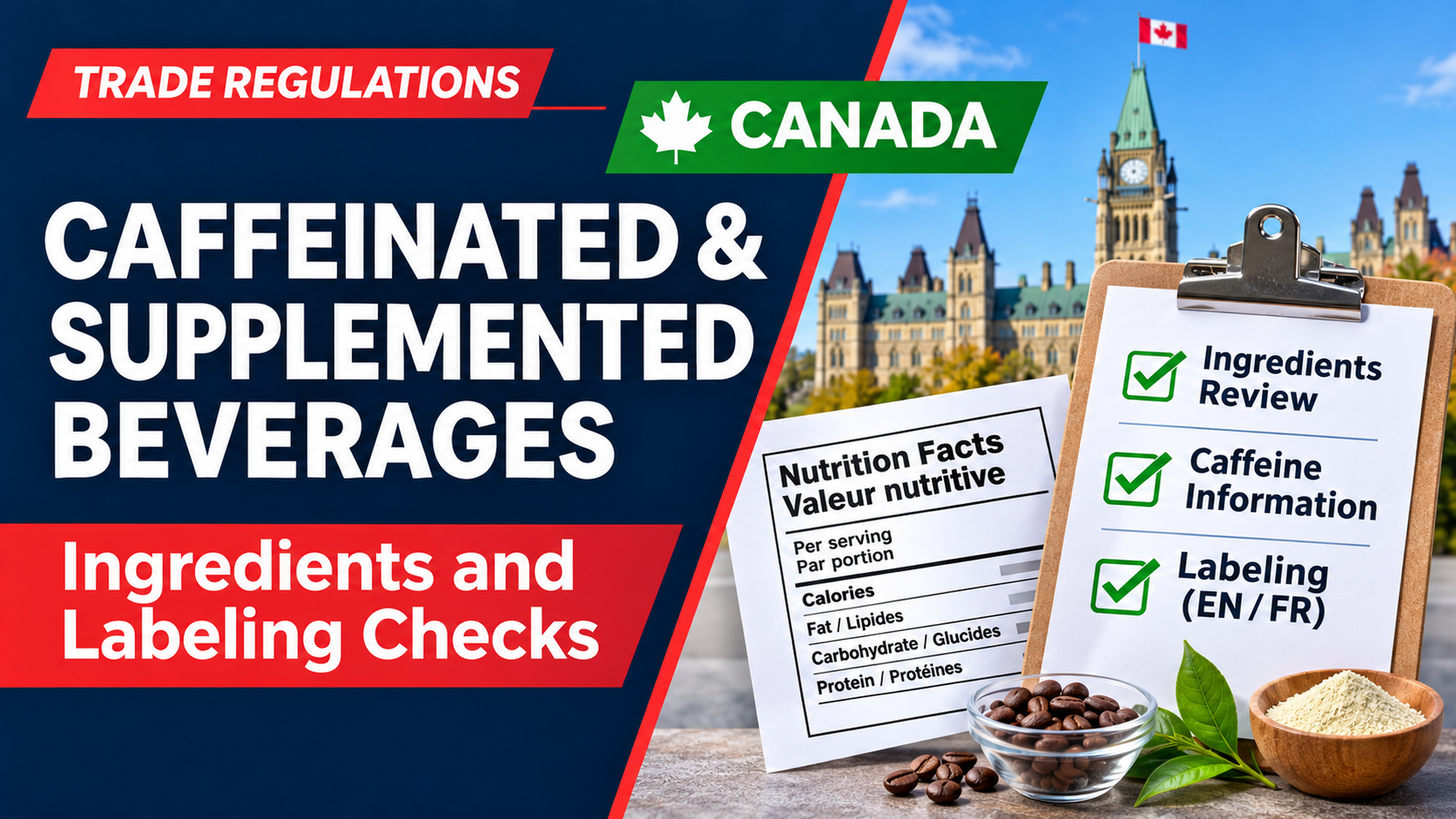
Check ingredient permissions and caffeine limits
For water-based beverages eligible under category 1, the current caffeine entry C.1 distinguishes two added-caffeine pathways. The conditions depend on beverage type, representations and total caffeine from all sources, as consumed.
The higher-caffeine pathway requires a caution against consumption by children under 14, pregnant or breastfeeding women, and people sensitive to caffeine. Additional serving-limit wording depends on the amount per serving. Other supplemental ingredients, including vitamins, must be checked against their own limits and warning thresholds, not assumed safe because the caffeine level passes. Health Canada, List, Parts I–IV.
Important 2026 change: Effective 13 August 2026, Health Canada permitted up to 30% combined fruit or vegetable juice, purée, pulp or nectar in the specified added-caffeine drinks under C.1(1) and C.1(2). Earlier guidance may still describe the former less than 25% condition. This change does not remove the restriction on using words such as “juice” or “nectar” on those products’ labels outside the ingredient list. Health Canada, Notice MASF-2606.
Build the required Canadian label
A supplemented food normally needs a Supplemented Food Facts table (SFFt), rather than an ordinary Nutrition Facts table, with a “Supplemented with” section identifying the supplemental ingredients and amounts. Applicable cautionary statements must appear on the label. A front-panel supplemented food caution identifier is required when the product carries prescribed cautions, while a product without cautions must not display that identifier. Check small-package exceptions individually. CFIA, supplemented-food labelling.
The new supplemented-food labelling framework has applied since 1 January 2026. Mandatory Canadian food-label information is generally bilingual in English and French, subject to limited exemptions. Separately assess whether the front-of-package nutrition symbol for sugars, sodium or saturated fat applies. Do not confuse that nutrition symbol with the supplemented-food caution identifier. Health Canada, 2026 label milestone and CFIA, bilingual rules.
Request evidence before approving artwork
The Canadian buyer should ask the manufacturer for the following before selecting a formula or approving a private-label can:
- Full ingredient list, ingredient purpose and whether caffeine is added or naturally present.
- Product category, intended consumer and any energy, performance or hydration representations.
- Total caffeine from all sources, expressed per serving and as consumed, plus serving size.
- Juice, purée, pulp and nectar percentages, together with vitamin and other supplemental-ingredient quantities.
- Bilingual draft artwork showing the SFFt, cautions, front-panel identifiers and applicable nutrition symbol.
- Supporting specifications and analytical results sufficient for the importer’s regulatory assessment.
Work with Nam Viet Group: Share your target Canadian category, intended serving size, proposed claims and ingredient restrictions. We can discuss available beverage concepts and provide relevant product specifications for your importer’s review. The importer remains responsible for confirming Canadian compliance before sale.
Scope note: This is a product-screening guide, not an approval of a particular SKU, label, licence or shipment.