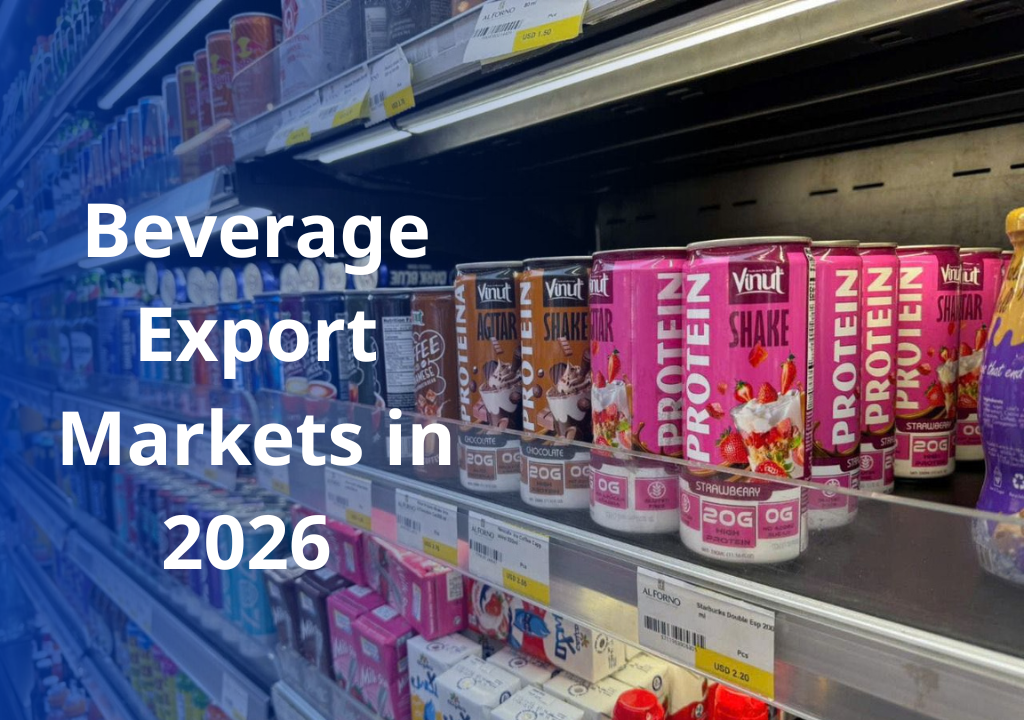
The global beverage market is entering a strong growth phase, with its value projected to reach USD 284 billion by 2026. This expansion is driven by rising demand for health-oriented, eco-friendly products that align with modern lifestyles. Emerging markets such as Asia–Pacific, the Middle East–Africa, and Latin America are opening up export opportunities for beverage brands — especially those capable of customizing products to meet local consumer preferences.
At the same time, trends like sustainable packaging, functional beverages, and digital commerce strategies are becoming key factors that help brands enhance their global competitiveness. To fully tap into the export potential, beverage companies need to invest in market research, product optimization, local partnerships, and strict compliance with international standards.
Global Market Outlook
As the global market continues to change rapidly, identifying and capitalizing on emerging export markets becomes key for brands to expand their international footprint. With changes in consumer behavior, economic growth, and adjustments in import policies, 2026 opens up new opportunities for beverage exporters.

Many opportunities open up in 2026 for drinks exporting businesses.
According to ReportLinker, the global soft drinks market is expected to reach $284 billion by 2026. This growth is driven by product innovation and a marked shift in consumer behavior — particularly the growing demand for healthier beverages and environmentally friendly packaging solutions.
Key Emerging Export Markets
1. Asia-Pacific: A Hub of Opportunities
The Asia-Pacific region continues to be a focal point for beverage exporters. With rapid urbanization and rising disposable incomes in countries like China, India, and Southeast Asian nations, there's a growing demand for diverse beverages. The non-alcoholic market here is particularly robust, encompassing bottled water, juices, soft drinks, and ready-to-drink (RTD) coffee and tea. Notably, there's a significant trend towards healthier living, leading to increased consumption of functional drinks, including probiotic and plant-based beverages.
2. Middle East and Africa: Untapped Potential
Emerging markets in the Middle East and Africa present significant opportunities for beverage exports. In 2021, the consumption of packaged beverages in these regions was substantial, with projections indicating continued growth . The increasing health awareness and a youthful demographic are driving demand for non-alcoholic and health-oriented beverages. For instance, the popularity of alcohol-free beers is rising, with brands like Carlsberg's Moussy and Heineken's Fayrouz gaining traction by aligning with local tastes and cultural preferences.
3. Latin America: Growing Health Consciousness
Latin American countries are witnessing a shift towards healthier lifestyles, leading to increased demand for low-sugar and functional beverages. In 2020, consumer spending on food and non-alcoholic in the region was significant, with Brazil and Mexico being major contributors . Exporters offering natural and health-focused drinks can find receptive markets in these nations, where there's a growing preference for products that align with health and wellness trends.
Trends Shaping Export Strategies
1. Functional and Health-Oriented Beverages
Consumers globally are gravitating towards drinks that offer health benefits beyond basic nutrition. The functional beverage market, including drinks with added vitamins, minerals, and probiotics, is expanding rapidly . Exporters should consider developing products that align with these health trends.

Health drinks are popular.
2. Sustainable Packaging
Environmental concerns are influencing consumer choices, making sustainable packaging a key differentiator. The packaging market is expected to reach $189 billion by 2026, with a significant emphasis on eco-friendly materials . Adopting recyclable and biodegradable packaging can enhance brand appeal in environmentally conscious markets.