2. Check fruit content, additions and sugar claims
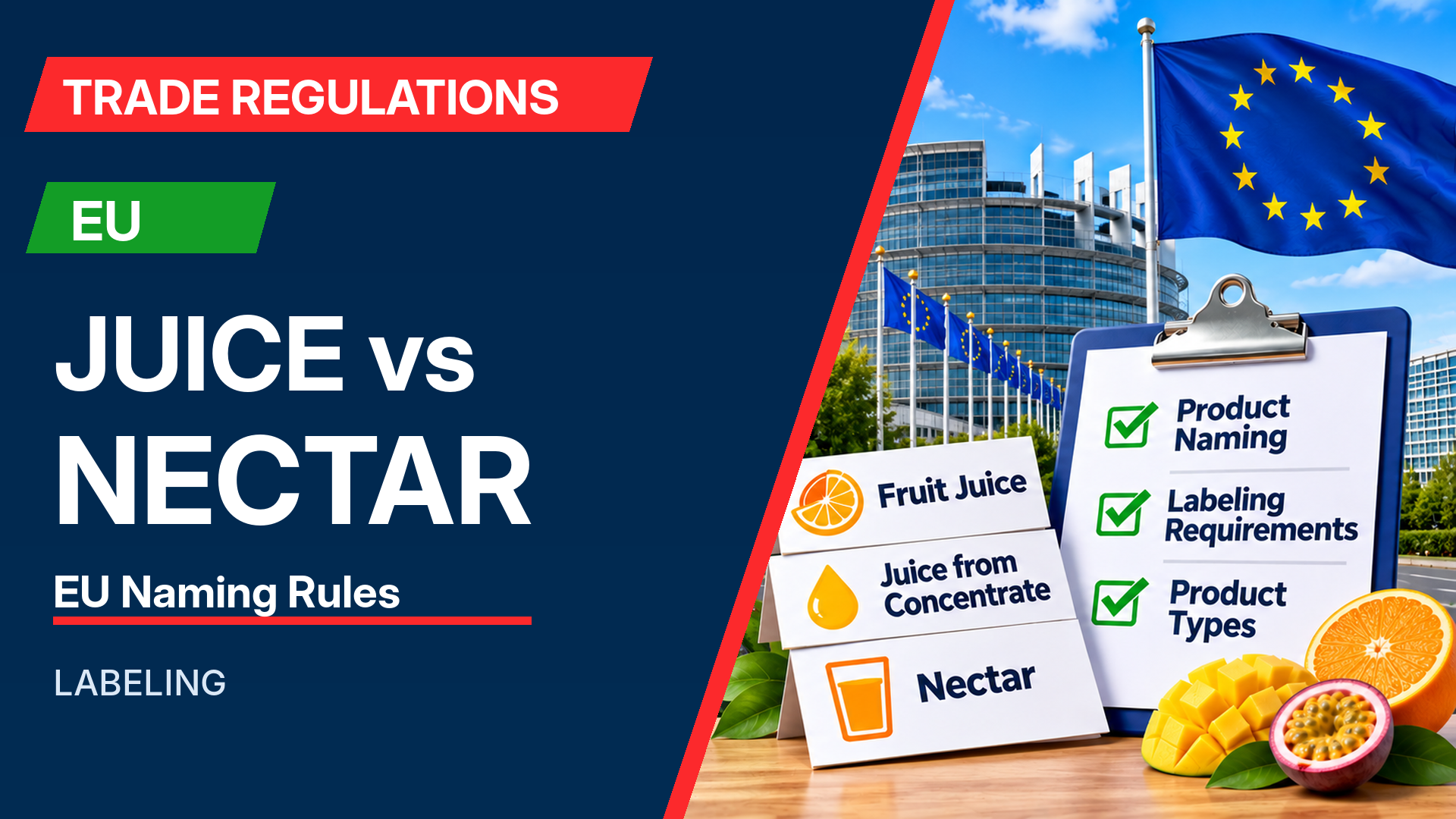
The minimum fruit content for a nectar depends on the fruit or fruit combination under Annex IV. Permitted sugars or honey are capped at 20%, 15% or 10% of the finished product by the Annex IV group. Sweeteners may be permitted for nectars, but not for the other specified juice categories. Do not use a single fruit-percentage threshold for every nectar. Annexes I and IV
The Directive restricts a no added sugars claim on nectar when sugars or other ingredients are used for sweetening, including sweeteners. When that claim is made, the label must also state contains naturally occurring sugars. A separate optional statement, fruit juices contain only naturally occurring sugars, may appear in the same field of vision as the name of fruit juice or fruit juice from concentrate. 2024 amendment
3. Apply the 2026 naming changes and transition
Directive (EU) 2024/1438 adds categories including reduced-sugar fruit juice and reduced-sugar fruit juice from concentrate. The defining process removes at least 30% of naturally occurring sugars while maintaining the specified essential characteristics. An ordinary juice cannot acquire this reserved name solely from an advertising claim. Amending Directive, Annex changes
Member States were required to adopt implementing measures by 14 December 2025 and apply them from 14 June 2026. Products placed on the market or labelled before 14 June 2026, lawfully under the previous rules, may continue to be marketed until stocks are exhausted. The transition is not permission to use outdated labels on newly labelled stock. Articles 5–6
4. Complete the destination-country label review
Regulation (EU) No 1169/2011 separately covers mandatory particulars, including ingredients, allergens when applicable, net quantity, date marking, food-business operator details and nutrition declaration. Product-specific juice rules supplement those general obligations. The required information must be legible and in a language understood by consumers where the drink is marketed. A Member State can prescribe one or more EU official languages locally. Mandatory information and language requirements
Importers should verify the actual Member State's transposing measures rather than treating the Directive alone as a final local label sign-off. The Commission's Food Labelling Information System helps locate mandatory indications but is a documentation tool, not legal approval. FLIS guidance
5. Finalise the manufacturer–importer handoff
Before approving the print file:
- Compare the full recipe and juice-processing route with the proposed reserved name.
- Confirm fruit-content calculation, permitted ingredients and any sweeteners against Annex IV.
- Check concentration disclosure, natural-sugar wording and any reduced-sugar claim.
- Match ingredients, nutrition, lot/date details and final artwork to production specifications.
- Have the EU importer confirm destination language and national implementation before printing.
Discuss your EU-market fruit beverage specifications with Nam Viet Group. Share the formula type, fruit percentages, target Member State and proposed artwork so the manufacturing team can prepare a technical dossier for your importer's review.
EU naming and labeling depend on the finished formulation, applicable national measures and the product's labeling date. This guide does not certify an individual SKU.