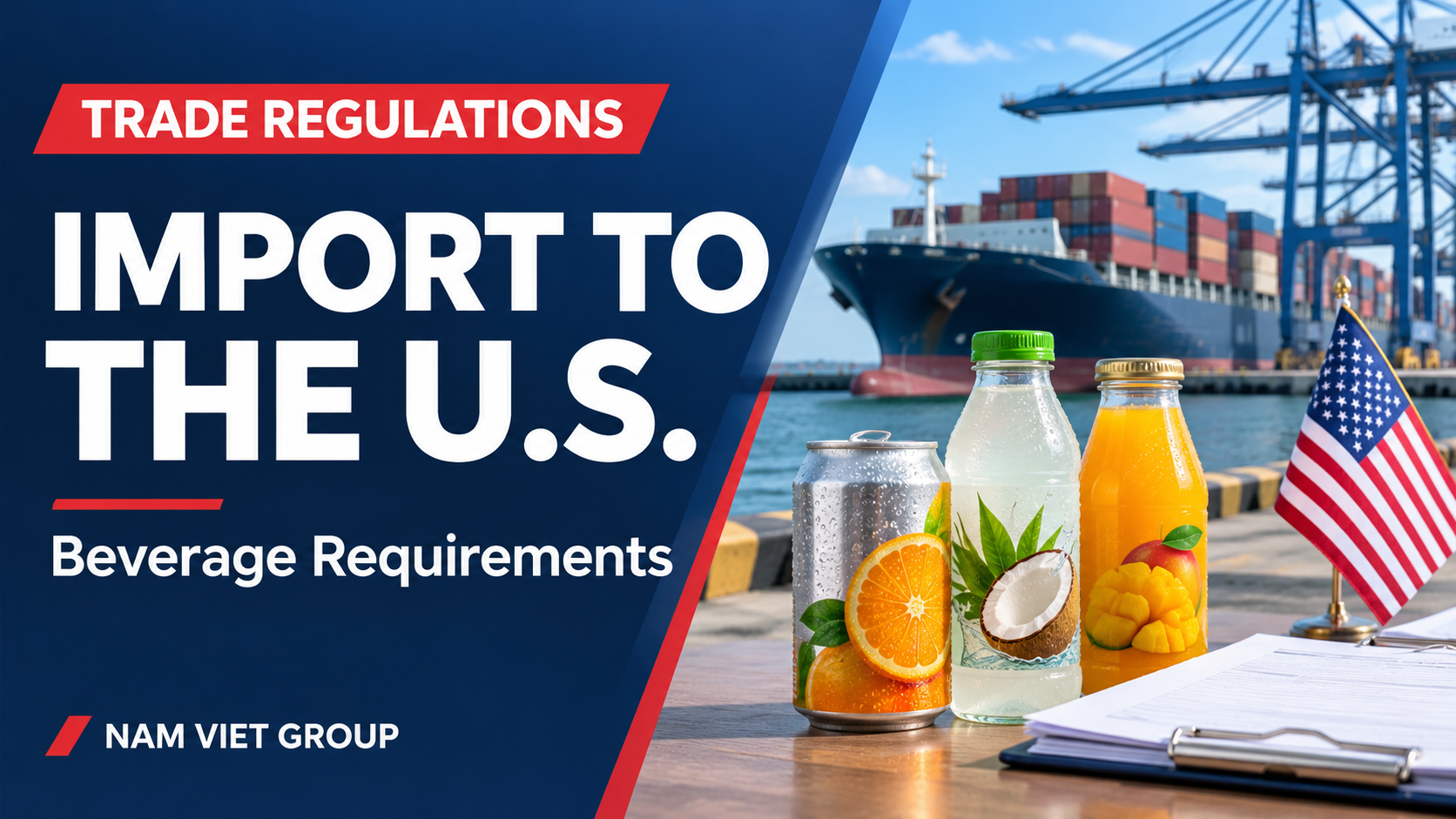
1. Classify the beverage before assigning compliance work
Start with the actual finished food, not its marketing category. Ask whether it is a juice sold as juice, a beverage made with a juice ingredient, or another formulated drink. Also establish whether the container is shelf-stable and hermetically sealed, how the beverage is processed, and whether added ingredients or claims trigger other requirements.
Fruit juice and vegetable juice. Under 21 CFR 120.1(a), juice sold as juice or used as an ingredient in beverages is within the scope of Juice Hazard Analysis and Critical Control Point (Juice HACCP) requirements. In a diluted juice beverage, the juice ingredient may be subject to Part 120 without automatically making the finished diluted beverage a Part 120 juice product. FDA — Juice HACCP Questions and Answers, Coverage Q1
Coconut water. FDA expressly treats liquid extracted from coconut, including coconut water and coconut milk, as juice for Juice HACCP purposes. Therefore, do not describe 100% coconut water as a beverage for which Juice HACCP applicability is merely uncertain. FDA — Juice HACCP Questions and Answers (2003), Applicability Q2
Tea, coffee and other formulated beverages. A beverage without a relevant juice ingredient should not be assigned Juice HACCP solely because it is packaged in a can or bottle. Evaluate the general food-safety obligations and any processing-based requirements separately. Where juice is included, assess the juice ingredient and finished beverage independently. 21 CFR 120.1(a) and FDA — Importing Human Foods
A practical product classification brief should identify the exact beverage name, formulation, juice percentage if relevant, acidity and water activity where needed, thermal or other processing, filling conditions, package closure, intended storage conditions, and final retail claims. This is a document-gathering recommendation, not a claim that every shipment requires the same laboratory test.
2. Confirm food-facility registration and the U.S. agent
Under 21 CFR 1.225, owners, operators or agents in charge of domestic and foreign facilities manufacturing, processing, packing or holding food for U.S. consumption generally must register unless an exemption under 21 CFR 1.226 applies. For foreign facilities, 21 CFR 1.232(c) requires U.S. agent contact information as part of registration.
The buyer should request the relevant facility's current registration details through an appropriate confidential channel, verify that the correct facility and food activity are represented, and assign responsibility for keeping information current. FDA food-facility registration is not FDA product approval or a certificate of shipment compliance. FDA — Importing Human Foods
2026 timing: For facilities required to register, FDA's current biennial renewal period runs from October 1 through December 31, 2026. An update to a registration is not a substitute for the required biennial renewal. FDA — 2026 Food Facility Registration Renewal
Do not confuse the foreign facility's U.S. agent with the FSVP importer or CBP importer of record. These roles can involve different entities and must be documented separately.
3. Assign the right importer food-safety responsibility
For foods covered by the Foreign Supplier Verification Programs (FSVP) regulation, the FSVP importer is generally the U.S. owner or consignee at the time of entry. If there is none, it is a U.S. agent or representative of the foreign owner or consignee who has agreed in a signed statement to take that role. This is a specific food-safety definition, not an assumption based on the shipping Incoterm. 21 CFR 1.500 — Definition of importer
The applicable FSVP importer must meet the relevant supplier-verification obligations and provide the identifying entry information specified in 21 CFR 1.509. However, not every imported beverage automatically follows the same FSVP pathway. Under 21 CFR 1.501(b), the FSVP rule excludes certain juice imported from a foreign supplier required to comply with, and in compliance with, Juice HACCP Part 120. Importers of Part 120 juice instead have applicable importer-verification duties under 21 CFR 120.14, including documented product specifications and affirmative verification steps, subject to the regulation's alternative arrangements.
For a juice drink containing a separately sourced juice ingredient, confirm which company imports the ingredient, which imports the finished drink, and which specific exclusions actually apply. An FSVP exception for qualifying juice is not a blanket exemption for every beverage that contains fruit flavor or some juice.
4. Screen acidified and low-acid canned-food requirements
A can, glass bottle or PET bottle does not, by itself, determine whether establishment registration and scheduled-process filing are required. FDA's acidified-food and low-acid canned-food framework turns on product characteristics, processing and packaging. For relevant shelf-stable foods in hermetically sealed containers, commercial processors must register establishments and file the required scheduled processes. FDA describes low-acid canned foods using a finished equilibrium pH above 4.6 and water activity above 0.85, with specified regulatory exceptions. Acidified-food classification has its own conditions. FDA — Acidified and Low-Acid Canned Foods, 21 CFR 108/113/114
Before treating a beverage as covered or excluded, the manufacturer should provide the process and product data necessary to determine classification, including actual formulation, equilibrium pH, water activity where relevant, filling method, shelf stability and closure. Where filing applies, confirm the correct processing establishment and product/container/process records. Do not invent an FCE or SID number for an unverified product.
5. Approve U.S. retail labeling before production
Use the actual U.S. product formula and final artwork. FDA's general food-labeling framework covers the food's statement of identity, ingredient declaration, nutrition labeling and manufacturer, packer or distributor information, subject to applicable exceptions. Relevant provisions include 21 CFR 101.3, 101.4, 101.5 and 101.9. Check the net-content statement and its presentation as part of artwork review rather than reusing an export label from another market.
For beverages that contain or represent fruit or vegetable juice, 21 CFR 101.30 governs percentage-juice declarations. Fruit depictions, flavor, naming and advertising can affect whether the rule applies, including products that contain no juice. A claim such as “100% juice” should be substantiated by the actual formulation and the detailed rule, not inferred from a product name.
Where major food allergens are used, apply the U.S. allergen-disclosure requirements to the actual ingredients, including sesame where relevant. FDA — Food Allergies. Separately, 19 CFR 134.11 generally requires country-of-origin marking of foreign-origin merchandise or its container unless an exception applies. Both FDA labeling and CBP origin marking belong in the artwork approval workflow.
6. Prepare the customs entry and tariff classification
Agree in writing who will act as the importer of record, who will file the entry, who will pay duties and fees, and who is responsible for FDA data. For commercial goods, entry procedures and bond requirements depend on the entry type and circumstances. CBP describes most consumption entries for merchandise imported for commercial resale as formal entries requiring entry-summary and bond arrangements. CBP — What Is a Consumption Entry?
Provide the broker with an accurate commercial invoice, packing information, shipping details, country of origin and enough composition information to classify the actual beverage. The applicable Harmonized Tariff Schedule of the United States (HTSUS) provisions and any additional measures must be checked for the entry date, product and origin. Do not use a single assumed duty rate for all Vietnamese juice, tea, coffee and coconut beverages. USITC — Harmonized Tariff Information
7. Submit Prior Notice before the shipment reaches the United States
FDA Prior Notice is a shipment-specific process separate from facility registration and CBP entry. Under 21 CFR 1.279(a), FDA must receive and confirm the notice for review at least 8 hours before arrival by water, 4 hours by air or rail, or 2 hours by road. For most commercial shipments, the notice can be submitted electronically through the CBP entry interface or FDA's Prior Notice System Interface. Timing and filing rules for international mail differ. The regulation limits how far in advance a notice may be filed depending on submission channel. 21 CFR 1.279(b)–(d) and FDA — Prior Notice of Imported Foods
The importer, shipper and broker should agree who prepares and confirms Prior Notice, reconcile the manufacturer and product details, and provide the confirmation number where required. Prior Notice confirmation is not FDA permission to distribute the food. FDA may review, examine, detain or refuse food that appears noncompliant. Do not release goods into U.S. commerce while FDA review requires them to be held. FDA — Import Basics
Pre-shipment buyer checklist
- Confirm the U.S. buyer, FSVP importer where applicable, importer of record and customs broker by legal entity and contact.
- Obtain a complete product brief with recipe-relevant classification data, packaging, process, net contents, shelf life and proposed U.S. claims.
- Match the actual manufacturing or holding facilities to applicable FDA registration and, where relevant, the foreign facility's U.S. agent.
- Select the correct safety pathway: Juice HACCP and importer verification, FSVP where applicable, and any acidified/low-acid scheduled-process controls.
- Approve English retail artwork, juice-content declarations where triggered, allergens, nutrition information and country-of-origin marking.
- Confirm tariff classification using the product's characteristics and the measures applicable on the expected customs entry date.
- Reconcile invoice, packing, transport and FDA filing data, then obtain Prior Notice confirmation within the applicable window.
- Track CBP and FDA release status before authorizing distribution.
A purchase order can specify which party supplies each data item and who approves it. That allocation is a commercial control, not a substitute for duties imposed by U.S. law.
Working with a beverage manufacturing partner
When discussing sourcing with Nam Viet Group, share the target U.S. sales channel, beverage category, desired formulation, packaging type and the information your importer needs. This helps align product specifications and label artwork with the buyer's review process before a commercial order is finalized. Discuss your target market, beverage category and packaging requirements with Nam Viet Group before finalizing your sourcing brief.
Scope note: This is an operational overview of U.S. federal requirements, not a product-specific admissibility determination. Final obligations depend on the actual product, participants and applicable rules at entry.