Import Beverages into Canada: SFC Licence, AIRS & Documents | Nam Viet Group
NAM VIET INSIGHTS
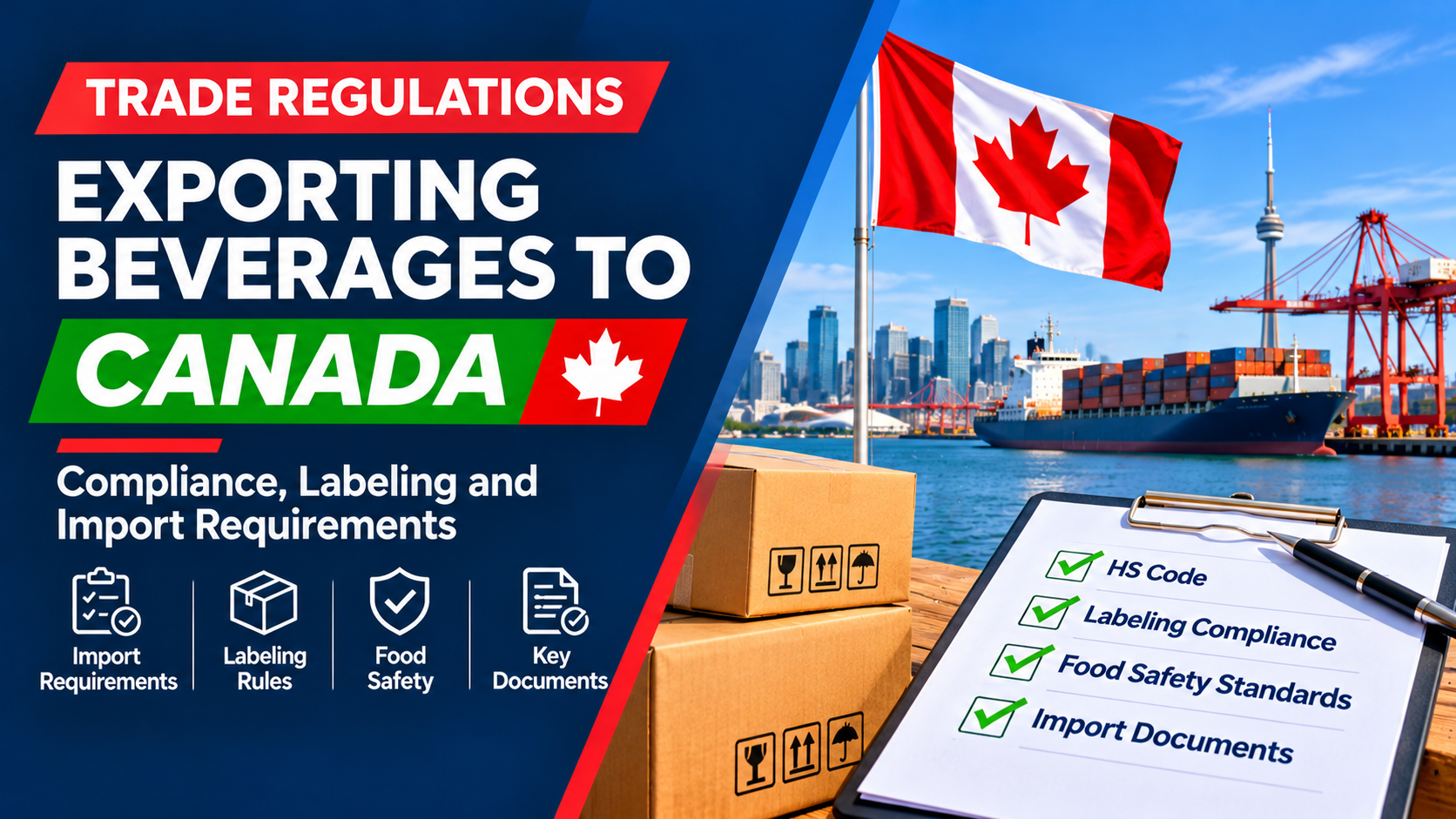
Importing Beverages into Canada: SFC Licensing, AIRS and Documentation
A Canada import guide for Vietnamese juice, coconut water and aloe drinks, covering SFC licences, AIRS, preventive controls, labels and shipment documents.
10 min read
To import packaged juice, coconut water or aloe vera drinks from Vietnam into Canada for commercial sale, start with an eligible importer and the correct Safe Food for Canadians (SFC) licence. Then establish the product-specific import conditions, supplier controls, Canadian label and shipment documents. A licence alone does not complete these steps. The Canadian Food Inspection Agency (CFIA) and Canada Border Services Agency (CBSA) have different responsibilities, and the import file must address both. CBSA — SFC licensing notice and SFCR section 13 — import information.
Scope and buyer responsibilities
This guide covers conventional, commercially packaged non-alcoholic drinks imported directly from Vietnam for Canadian retail sale. It focuses on fruit juice, coconut water and formulated aloe vera drinks. Alcohol, personal imports, trade-show samples, unprocessed agricultural materials, natural health products and supplemented-food-specific requirements are outside this overview. Provincial requirements and final recipe-specific decisions need separate assessment.
Use the following allocation as a practical project checklist. It does not transfer statutory responsibilities between companies.
Workstream
Lead party
Evidence to prepare
Importer eligibility and licensing
Canadian importer
Legal entity, SFC licence, covered import activity and commodities
Product and supplier review
Importer, supported by manufacturer
Formula, process, safety controls, specifications and supplier evidence
Label and packaging review
Importer and brand owner
Canadian artwork, nutrition data, claims and lot-code layout
Entry and shipment coordination
Importer and customs broker
Customs account, classification, invoice, transport and import-declaration data
1. Identify the finished beverage and the correct licence category
Do not select a regulatory pathway from the brand name or the phrase “tropical drink.” Build a product brief that describes the ingredients, juice percentage, added sweeteners, plant components, treatment, packaging and storage conditions. For an aloe vera drink, identify the actual aloe ingredient and formulation rather than treating every aloe-based product as interchangeable.
CFIA's licence guidance lists fruit juice, juice from concentrate and fruit nectars under processed fruits and vegetables. Other non-alcoholic drinks can fall within different licensing categories. Select the activity and commodity that match the finished food, rather than choosing a generic beverage category for an entire catalogue. CFIA — licence application guidance, Annexes A and B.
As a purchasing control, settle the product specification before requesting a tariff classification, AIRS assessment or final artwork review. A change in ingredients or processing should trigger a review of those decisions. This article does not assign a Canadian tariff code or determine the admissibility of an individual formula.
2. Confirm who holds the SFC import licence
For ordinary commercial imports within this guide, the importer needs an SFC licence before presenting the shipment at the Canadian border. The licence cannot be obtained at the border. Give the broker the number exactly as CFIA issued it and confirm that the licence covers the relevant importing activity and food commodities. CBSA — Customs Notice 24-03, paragraphs 2–6 and CFIA — selecting licensable activities and commodities.
A Vietnamese manufacturer is not automatically the Canadian food importer. CFIA permits non-resident importers only under defined conditions. Its guidance states that businesses outside the United States are not eligible for this route for products such as processed fruits and vegetables or manufactured foods. For the direct Vietnam-to-Canada beverage route considered here, arrange a licensed Canadian importer instead of assuming the Vietnamese exporter can hold the import licence. CFIA — non-resident importers, foreign suppliers and other products.
The legal test concerns the importer's fixed place of business, recognition of the relevant foreign food-safety system and the shipment route. Simply moving goods through another country does not satisfy the direct-shipment condition. SFCR section 12(1) and (4).
Before approving the purchase order, record the importer, licence holder and broker as separate roles. The same company may perform more than one role, but the agreement should identify who supplies information, makes declarations and resolves rejected entry data.
3. Use AIRS for the exact product and shipment route
The Automated Import Reference System (AIRS) identifies CFIA import requirements for regulated commodities. It is a reference tool, not the legislation itself or a product approval. CFIA warns that the information changes and that importers remain responsible for accuracy at importation. CFIA — AIRS, purpose and conditions of use.
Use the commodity search or drill-down with the actual product description. Follow the prompts for origin, Canadian destination, intended use and any relevant product or packaging details. CFIA's tutorial demonstrates how those selections affect the resulting search path. CFIA — AIRS tutorial.
A useful working procedure is to save the selected inputs, result and lookup date in the shipment file. Recheck the route before dispatch and declaration, particularly when a formula, destination or supplier changes. This dated record is a recommended internal control, not a separate government certificate.
Read the conditions returned for that route and obtain the documents they call for. Do not assume that every beverage from Vietnam needs the same health certificate or permit. Equally, do not treat the absence of one document on an unrelated product search as an exemption for your shipment. No product-specific AIRS result is claimed in this general guide.
4. Establish preventive controls and the written PCP
Imported food within scope must be manufactured, prepared, stored, packaged and labelled under conditions providing at least the protection required by the relevant Canadian preventive-control provisions. This requirement concerns how the food is actually produced, not merely whether the supplier has a certificate. SFCR section 11(1).
A licence holder generally needs a written preventive control plan (PCP) for its licensed activities. The plan must address applicable hazards, effective controls, verification, implementation evidence and relevant packaging and labelling controls. Importers must also address the foreign supplier's controls for the imported food. SFCR section 86(1) and SFCR section 89(1) and (4).
The small-business exception is not a general juice exemption
Section 86(3) provides a limited exception where gross food sales are C$100,000 or less over the 12 months preceding the most recent application to issue, renew or amend the licence. However, activities involving listed categories, including processed fruit or vegetable products, still require a written PCP. Do not tell a small juice importer that low turnover alone removes this obligation. SFCR section 86(3).
For supplier review, request evidence appropriate to the actual hazards and process. A practical dossier can include the process flow, relevant treatment information, product specifications, hazard-control evidence, packaging controls and verification records. Testing and audit evidence should support the identified risks rather than form a universal checklist of tests for every beverage. CFIA allows different assessment approaches, but the importer must ensure its plan fits the food and supplier. CFIA — importer PCP guide, hazard identification and control measures.
For example, requesting treatment and package-integrity evidence for a shelf-stable drink is a sensible review step. It does not mean that every shipment needs an identically named laboratory report or that a supplier's food-safety certification replaces the importer's assessment.
5. Prepare Canadian retail labels before printing
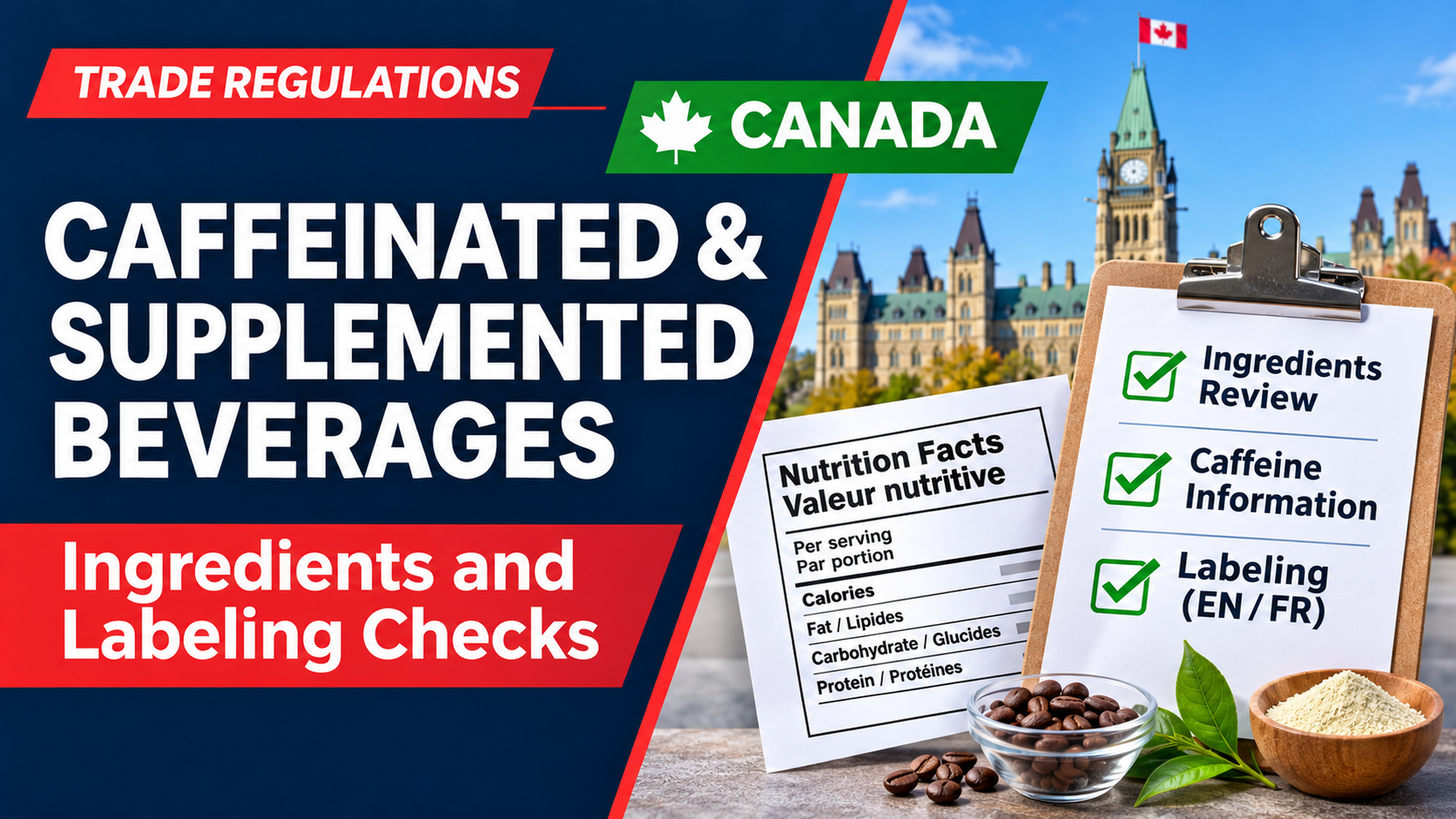
Most mandatory information on consumer prepackaged food must appear in English and French. Specified exceptions exist, including the responsible business's name and address, which may be in either official language. Being imported from Vietnam does not, by itself, qualify a drink for a bilingual-labelling exemption. CFIA — bilingual labelling, requirements and exemptions.
Review the final artwork against the actual formula and package. The core review should cover the common name, net quantity in the appropriate units, ingredients and required allergen information, responsible business details, and the Canadian Nutrition Facts table unless an applicable exception exists. Claims and commodity-specific requirements need assessment in addition to the general checklist. CFIA — food labelling requirements checklist.
Front-of-package nutrition labelling is already a compliance requirement in 2026. The transition deadline was January 1, 2026. Prepackaged foods meeting or exceeding the applicable thresholds for saturated fat, sugars or sodium require the nutrition symbol unless an exemption or prohibition applies. Assess the actual beverage and applicable rules before artwork approval. Do not assume that “no added sugar” alone determines whether the symbol is needed. CFIA — FOP nutrition symbol, requirements and exemptions.
Agree who approves the Canadian artwork and retain that version with the product specification. An export label prepared for another market is not a substitute for this review.
6. Build the customs and shipment-document file
The commercial importer also needs an import-export program (RM) account. A nine-digit business number precedes RM registration, and the CBSA Assessment and Revenue Management (CARM) system handles the relevant customs account arrangements. An RM account is not an SFC food-import licence. CBSA — register for or modify an import-export account.
Under section 13 of the SFCR, the standard import-information requirements include the importer and supplier details, import licence number when held, country of origin, first destination in Canada, and the food's common name and quantity. Normally, the information is due before or at importation. The regulation provides a specific Minister-authorized exception, which should not be assumed for an ordinary shipment. SFCR section 13(1)–(3).
Prepare the following working file with the importer and broker. Some entries are required declaration data, while others are supporting evidence or conditional documents.
File component
What to assemble
Status
Commercial invoice information
Accurate parties, product descriptions, quantities, prices, currency and origin
Customs data requirements apply, with accepted formats and exceptions
Packing and transport information
Carton and lot references, shipment identifiers and transport records
Recommended reconciliation pack supporting entry and traceability
SFC and food-import data
Correct licence, supplier, origin, first Canadian destination and food description
Required data for the applicable import route
AIRS-specific documents
Certificates, permits or other authorizations identified for the actual route
Conditional, not identical for all beverages
Supplier-control file
Process, hazard-control and verification evidence
Supports the importer's applicable preventive-control obligations
Preferential-origin evidence
Records supporting any claimed preferential tariff treatment
Conditional on the claim and applicable proof rules
CBSA permits qualifying commercial invoices to supply the required invoice information. A separate Canada Customs Invoice form is not automatically necessary when an accepted commercial invoice contains the required data. The broker should also reconcile the detailed product description and customs classification used in the entry. CBSA — D1-4-1, paragraphs 2–4 and Appendix A and CBSA — D17-1-4, paragraph 32.
Do not use one duty rate for every Vietnamese beverage. Classification and origin affect tariff treatment, and a claim under the Comprehensive and Progressive Agreement for Trans-Pacific Partnership (CPTPP) requires the applicable origin, shipping and proof conditions to be met. Shipment from Vietnam alone does not establish eligibility. CBSA — origin of goods and preferential tariff treatment.
The Integrated Import Declaration (IID) allows the filer to submit customs and participating-agency information for release processing. Submission is not release permission. Obtain the actual release decision before moving goods out of customs control. CBSA — D17-1-4, paragraphs 30 and 34–36.
7. Keep traceability and recall arrangements operational
The importer's records must identify the food and its lot or other required identifier, link it to the immediate supplier, and identify business recipients when it is supplied onward. The rules do not require recording each retail consumer as a downstream customer. Traceability documents must remain accessible in Canada for two years after the food is supplied to another person or sold at retail. This is a food-traceability period, not a statement that every customs record can be discarded after two years. SFCR section 90(1)–(3).
For consumer prepackaged food not packaged at retail, the traceability identifier must be a lot code, subject to the stated exceptions. Align the code on the finished drink with receiving and distribution records. SFCR section 92(1)–(3).
Prepare complaint and recall procedures and identify the people responsible before starting imports. The importer needs a workable way to investigate a complaint and locate affected stock, not just a supplier contact in an email thread. CFIA — importing food, steps 5 and 10.
Final purchasing and dispatch checklist
Before authorizing production or shipment, use these practical sign-offs:
The importer, licence scope and customs account arrangements are confirmed.
The finished formula, AIRS route and supplier-control evidence agree with one another.
The PCP decision records the actual commodity and any relevant exception.
Canadian artwork, nutrition data and lot coding have been reviewed for the final product.
Invoice, shipment and declaration data are reconciled, with responsibilities for release and record keeping assigned.
Discuss your Canada-market sourcing requirements
Share your beverage category, intended Canadian sales channel, formulation preferences and packaging requirements with Nam Viet Group. Agree which product specifications and supporting information your importer needs before finalizing the sourcing brief and artwork.
This guide describes selected federal requirements for a general commercial import route. It is not a product-specific admissibility decision or a substitute for the responsible importer's review of the final formula, shipment and applicable provincial requirements.
Frequently asked questions
Can the Vietnamese manufacturer hold the SFC import licence for a direct shipment to Canada?
Not simply because it manufactures or exports the drink. CFIA restricts non-resident importer eligibility by location, food category and shipment route. For the direct Vietnam beverage route covered here, use an eligible Canadian importer with the appropriate licence. A separate customs account does not establish eligibility for an SFC food-import licence. CFIA — non-resident importers (https://inspection.canada.ca/en/importing-food-plants-animals/food-imports/non-resident-importers) and SFCR section 12 (https://laws-lois.justice.gc.ca/eng/regulations/SOR-2018-108/section-12.html).
Does an AIRS result mean that a beverage is approved for Canada?
No. AIRS is a reference tool showing import conditions. The importer must select the correct product and route, meet the resulting requirements and comply with the applicable legislation. Save a dated lookup as an internal control, but do not treat it as a government approval certificate. CFIA — AIRS conditions of use (https://inspection.canada.ca/en/importing-food-plants-animals/airs).
Can a small juice importer operate without a written preventive control plan?
Low sales alone do not establish an exemption. Section 86(3) retains the written PCP requirement for listed foods, including processed fruit or vegetable products, even where the food-sales threshold is met. Confirm the actual licence commodity and the statutory measuring period before claiming an exception. SFCR section 86(3) (https://laws-lois.justice.gc.ca/eng/regulations/SOR-2018-108/section-86.html).
Does every juice or coconut water need a front-of-package nutrition symbol?
No blanket answer applies to every formula. The requirement depends on the relevant nutrient thresholds and any applicable exemption or prohibition. The compliance deadline was January 1, 2026. Assess the final product rather than deciding from a claim such as no added sugar. CFIA — front-of-package nutrition symbol (https://inspection.canada.ca/en/food-labels/labelling/industry/nutrition-labelling/fop-nutrition-symbol).
Are beverages shipped from Vietnam automatically duty-free under CPTPP?
No. Preferential treatment depends on the product classification, qualifying origin, shipping conditions and applicable proof requirements. Do not infer eligibility from the export country alone or apply one assumed rate to an entire beverage range. CBSA — origin and preferential tariff treatment (https://www.cbsa-asfc.gc.ca/import/origin-origine-eng.html).
LET'S TAKE THE NEXT STEP
Discuss your beverage requirements.
Share your market, product and preferred packaging with our team.