2. Confirm the process and container, not just the recipe name
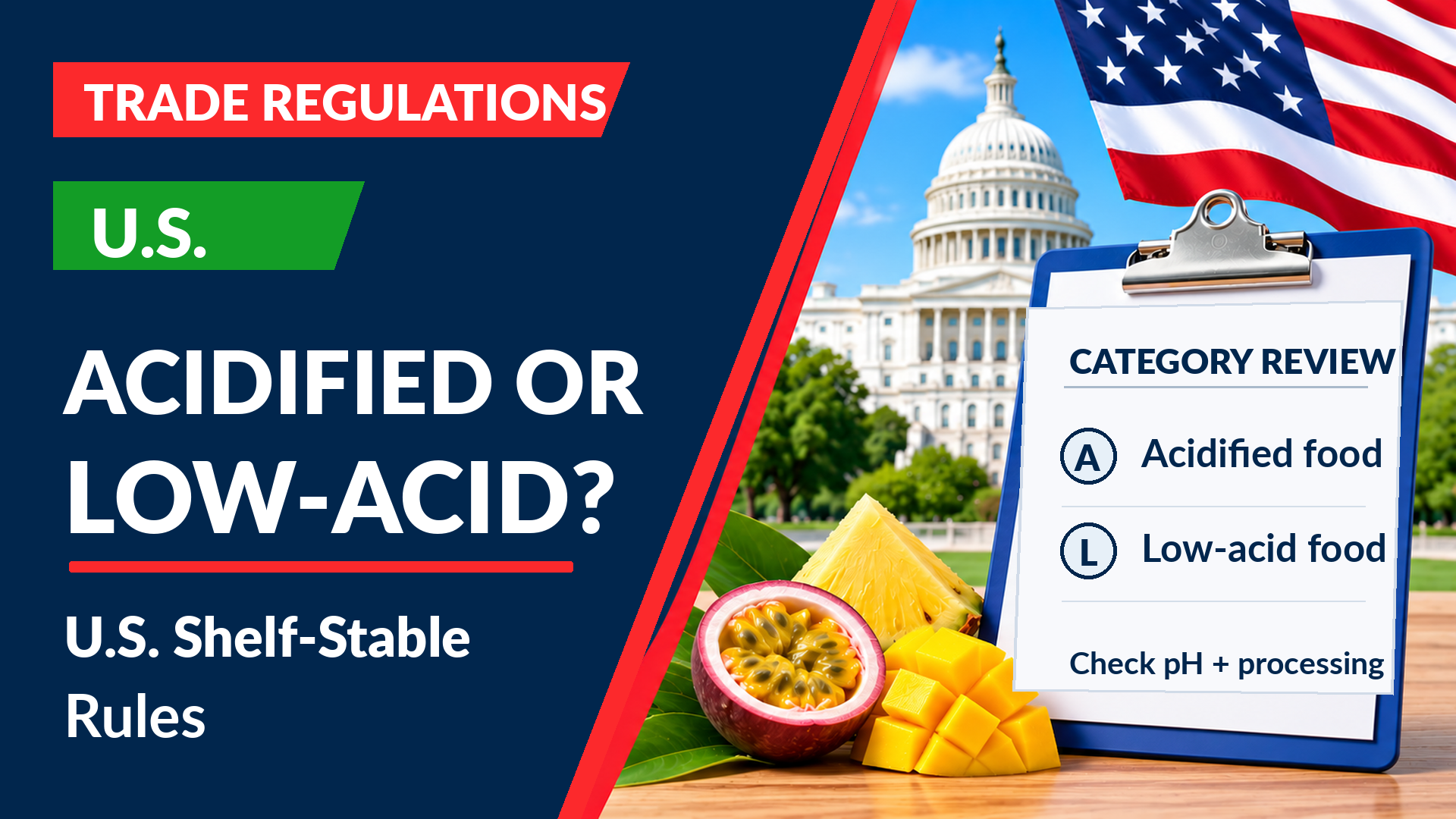
The manufacturer should have a qualified processing authority assess the specific formulation and preservation method. For products within these rules, the scheduled process must account for relevant critical factors, which may include processing times, temperatures, pH control, packaging and container closure. A fruit drink, coconut beverage or ready-to-drink tea cannot be classified from its marketing name alone. FDA processing guidance
A hermetically sealed container is designed to prevent microorganisms from entering after processing. Metal cans are only one possibility. For retorted or aseptically processed beverages, check whether the package and process fall under Part 113. A changed formula, pack size, container type or processing method may call for a different filed process. FDA AF/LACF filing overview
3. Separate the processor's FDA filings from importer duties
For qualifying AF/LACF, the Vietnamese processor registers the establishment using FDA Form 2541 for Food Canning Establishment (FCE) registration and files a scheduled process. AF uses 2541e. LACF uses 2541d, 2541f or 2541g, depending on method. Foreign processors register before U.S. import offers. File the process within 60 days of registration and before packing a new covered product. FDA registration and forms
FDA filing is not approval of the product or process. FCE registration and the process identifier, commonly called the Submission Identifier (SID), are distinct from general FDA Food Facility Registration. The U.S. importer or broker does not normally file the processor's schedules in its own name, but should match the declared processor, FCE and applicable SID to the goods before entry. 21 CFR 108.25 and FDA import verification
4. Request five records before confirming the shipment
- Formula and measurements: final equilibrium pH, aw, ingredients and the basis for classifying the product.
- Process assessment: qualified processing-authority documentation identifying the critical controls and processing method.
- Pack details: material, size, closure system and whether the container is hermetically sealed.
- FDA filing references, if applicable: processor's FCE registration and the corresponding scheduled-process SID for the actual product and pack.
- Batch and label checks: production records, lot traceability, storage conditions and U.S. labeling review.
The U.S. importer verifies the applicable regulatory pathway and entry data, including FDA Prior Notice and the other food-import obligations. Missing or mismatched AF/LACF filing information can delay entry or lead to detention or refusal. FDA importing human foods
5. Keep overlapping food-safety rules in view
AF/LACF status does not replace every other U.S. requirement. For juice products, the separate Juice Hazard Analysis and Critical Control Point (HACCP) rules may also apply. FDA explains that some juices fall under both Juice HACCP and Part 113. Food-safety exemptions are hazard-specific, not blanket waivers. FDA Juice HACCP guidance
Discuss your U.S.-market beverage specifications with Nam Viet Group. Share the beverage type, formulation category, processing method and planned pack so the manufacturing team can coordinate the relevant technical information for your importer.
This is a classification framework, not an AF/LACF determination for any individual recipe. Confirm product-specific measurements and process evidence before shipment.