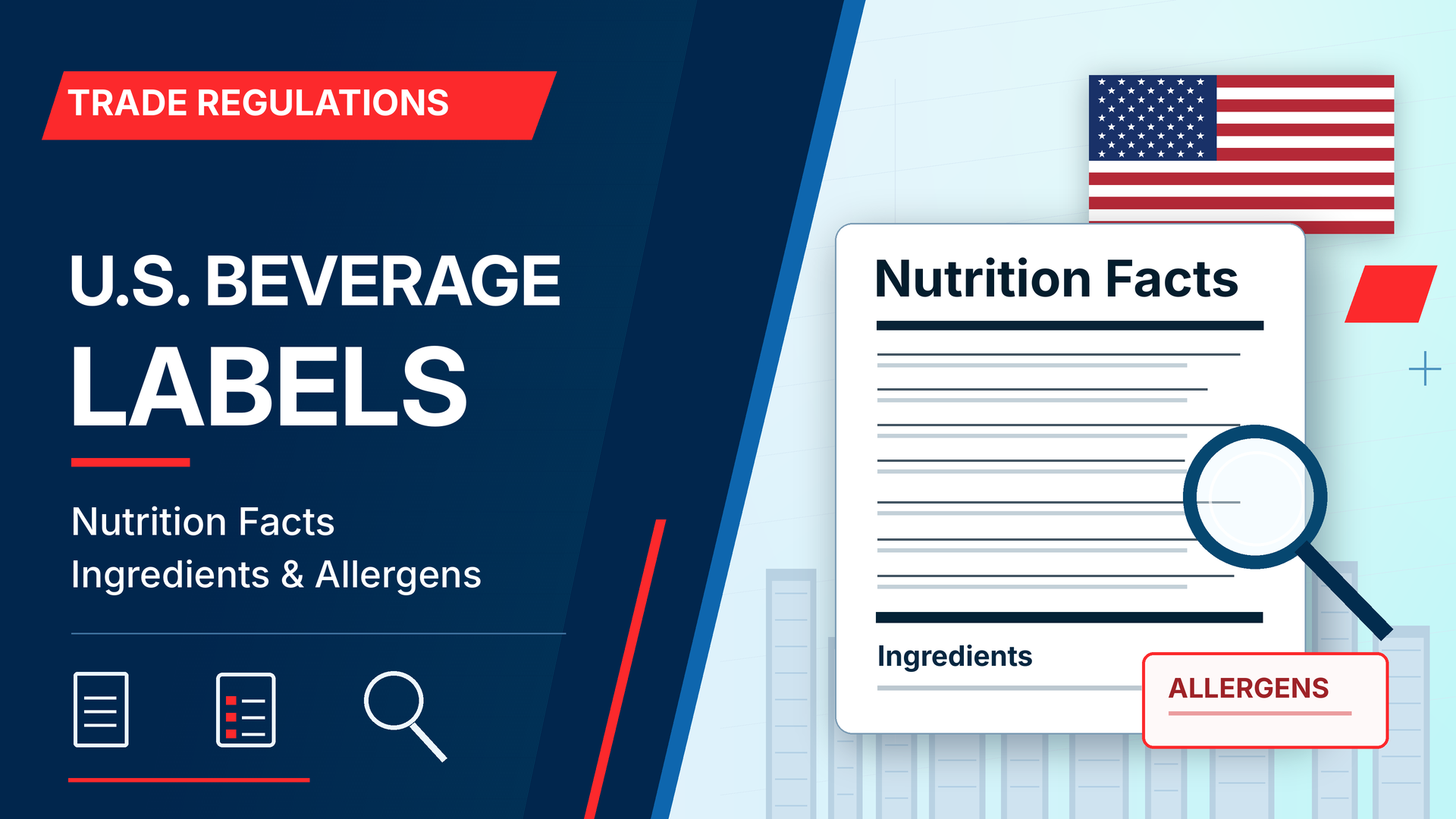
For a beverage sold in the United States, attractive packaging is not enough. The product name, net quantity, Nutrition Facts, ingredient list, allergen information and responsible business details must match the actual formula and applicable FDA rules. Vietnamese exporters and U.S. buyers should approve the finished retail artwork together before production, especially for juices, coconut water, ready-to-drink coffee and plant-based drinks.
1. Identify the beverage correctly
The front panel generally needs an accurate statement of identity and net quantity of contents. The information panel carries other mandatory details, including the name and address of the manufacturer, packer or distributor. A trademark is not a substitute for the food's legal or common name. 21 CFR 101.3, 101.7, 101.5.
Required labeling information must generally appear in English. If another language is used, additional language requirements can apply to the mandatory statements. Review both the front and information panels, not just a translated ingredient sticker. 21 CFR 101.15.
2. Build Nutrition Facts from the finished product
Most packaged beverages need a Nutrition Facts panel unless a specific exemption applies. Determine the product's reference amount customarily consumed, serving size and servings per container under 21 CFR 101.9 and 101.12.
Pack size matters. Certain individually sold packages containing 200% to 300% of the applicable reference amount require both per-serving and per-container columns, subject to the regulation's exceptions. Do not copy a 330 mL panel onto a 490 mL can without checking the applicable beverage category.
Validate calories, sodium, total sugars, and all other required nutrients against the final recipe. Total sugars and added sugars are not interchangeable. Naturally occurring fruit sugars are handled differently from sugars added during processing. .